
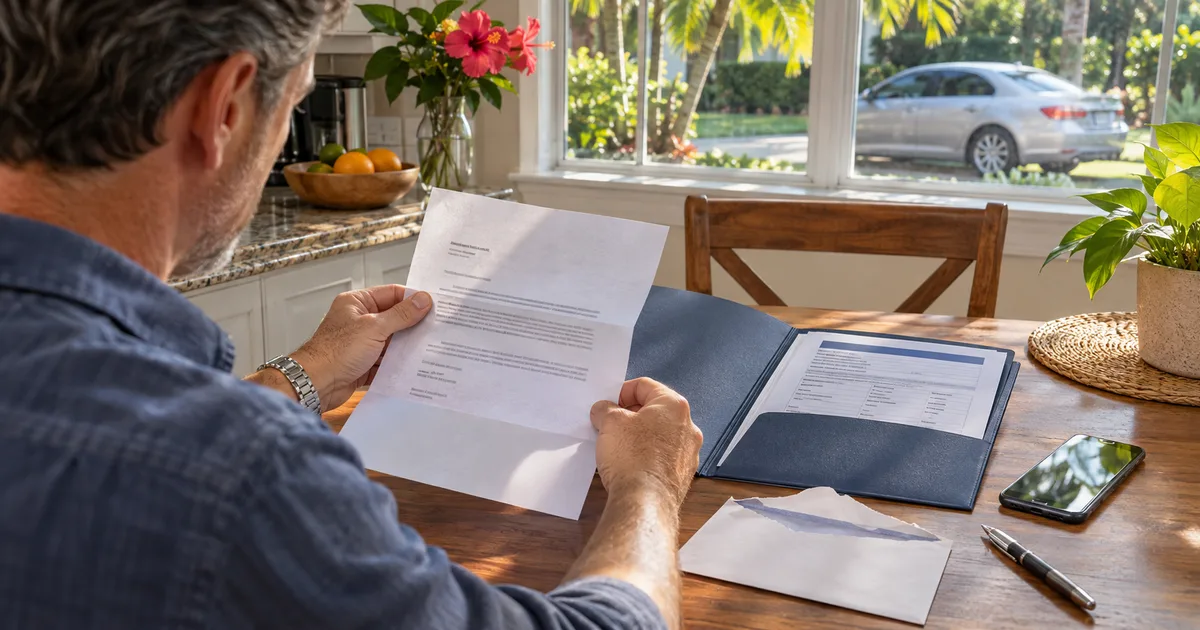
An insurance letter from the Florida Department of Highway Safety and Motor Vehicles can be unsettling, especially when you believe your policy is active. Start with the actual notice and the dates it identifies. A current insurance card alone may not answer a question about an earlier period.
This guide helps you prepare a focused conversation with your insurer and FLHSMV. It does not determine your driving eligibility or replace the instructions and deadline on your individual notice.
First, identify what the letter is asking
FLHSMV explains that it may send an insurance-verification letter after an insurer reports a cancellation or vehicle removal while a valid Florida registration remains and no replacement Florida policy has been reported. A crash or a citation for driving without proof of insurance can also prompt verification. A letter therefore needs to be read in context; do not assume every insurance notice is an FR-44 request.
On your copy, mark the notice date, any response deadline, the vehicle involved and the exact information requested. If it is a Notice of Suspension, FLHSMV directs readers to the FR Sanction number and its corresponding instructions. Its Received a Letter page also explains how to access a missing notice through the official MyDMV Portal.
Build one timeline before making several calls
Put the notice next to your policy records. Write down the previous policy’s ending date, the replacement policy’s effective date and any date when you added or removed the vehicle. Use the dates shown in the documents, rather than the day you remember speaking to someone or making a payment.
A simple preparation sheet can have four columns: document, date shown, question to resolve and person responsible for answering. For example, a cancellation notice may raise one question for the prior insurer while a replacement declarations page raises another for the new insurer. Keeping these separate makes it easier to explain the situation without guessing.
- Keep the complete letter, including any reverse-side instructions.
- Gather the relevant insurance cards and declarations pages.
- Have the policy number, vehicle identification number and registration information available for the appropriate secure conversation.
- Keep any cancellation, replacement or vehicle-change confirmations with those records.
If the coverage summary is unfamiliar, our declarations-page guide can help you locate the information to discuss. Verify the actual vehicle and effective dates against your own documents.
Ask the insurer a precise reporting question
Instead of asking only “Am I insured?”, explain which vehicle and period the letter names. Ask the insurer to check the relevant policy record and explain whether anything needs to be corrected or supplied. If you switched companies, keep the old and new policy information available so the conversation covers the transition.
Useful questions include: Which dates does your record show? Is the listed vehicle correctly identified? What information can you confirm for the period named in this notice? If a correction is needed, who handles it and what confirmation can I retain? Ask how to follow up on an unresolved item. Do not assume that starting a new quote resolves a question about an earlier policy.
Keep an insurance filing question separate
If your notice or insurer identifies an SR-22 or FR-44 issue, make that a separate item in your notes. Ask which filing is involved and what confirmation is available. Our Florida FR-44 filing-status guide covers that narrower conversation; it is different from assuming any insurance-verification letter requires an FR-44.
If your records suggest a gap, review our Florida FR-44 lapse guide and ask about your specific circumstances. An agent can discuss insurance, while FLHSMV controls the state’s record and driving-status determination.
Finish with a documented response, not an assumption
Follow the response route on the verified notice or official agency website. Record the date you responded, the information supplied and any confirmation or reference number provided. Ask FLHSMV how to check that the requirement has been addressed and what, if anything, remains outstanding. Do not treat a phone conversation, new policy purchase or submitted document as confirmation of reinstatement.
Keep driver’s-license numbers, policy documents and other personal information out of public comments and social posts. Begin with an official contact route rather than sending a notice to an unfamiliar address.
Need help with the insurance side?
Contact Foxx Insurance about coverage or a quote, or call 877-409-1063. Tell the agency that you have a Florida insurance notice and describe the insurance question you need answered. Have the letter and policy timeline ready for the appropriate private discussion. FLHSMV’s instructions and your individual record remain the basis for resolving the state’s notice.
Source reviewed November 22, 2026: FLHSMV — Received a Letter. General preparation information; the individual notice controls the requested response.