
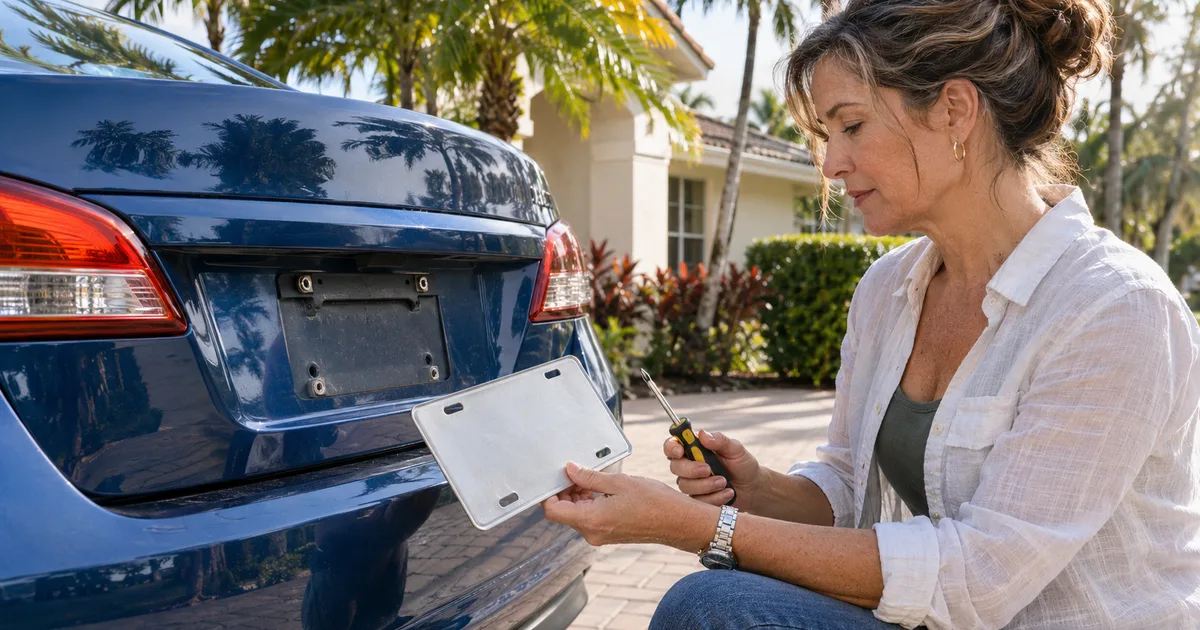
Selling a car changes more than who holds the keys. For a Florida seller, the plate, vehicle records, and insurance change need to be coordinated. If your insurance also involves an FR-44 requirement, include that issue in the conversation before requesting cancellation. A sale receipt alone should not be your instruction to stop every part of your coverage.
This checklist focuses on the handoff after a sale. For choosing a policy when you no longer own a vehicle, use our separate Florida non-owner insurance guide. For an existing filing question, ask the insurer and FLHSMV to confirm the requirement that applies to your record.
Keep your Florida plate with you
FLHSMV's selling-a-vehicle guidance explains that the seller keeps the license plate. Remove it from the sold vehicle. The department says a seller may transfer the plate to a new or replacement vehicle, and identifies situations when the plate must be surrendered, including cancellation of the insurance associated with it.
Decide whether you are replacing the car or leaving vehicle ownership before asking for an insurance change. Those are different conversations. If you expect to buy another car, ask the motor vehicle service center how the plate transfer should be handled. Do not give the buyer your plate to use while they arrange their own registration.
Coordinate the plate step before cancellation
Florida's official insurance information instructs drivers to surrender the plate before cancelling insurance. Required insurance must remain in place during the registration period, including when a registered vehicle is not being driven. Simply parking a car is not the same as completing the registration and insurance steps.
Before setting a cancellation date, contact the appropriate motor vehicle service center or tax collector and your insurer. Ask how the plate surrender or transfer will be recorded and what confirmation you can retain. Keep the receipt or other confirmation with the sale paperwork. If you mail a plate, ask how you can confirm that it has been processed; do not guess that the mailing date settles every record.
Make any FR-44 question explicit
Tell the agent that you sold the vehicle and that an FR-44 is involved. Ask: “What does the sale change on my policy, and what do I need to verify about my filing before anything is cancelled?” Do not treat a plate surrender receipt as proof that a separate driver-related requirement has ended.
Have your current policy information and any FLHSMV notice available for that discussion. If you do not know whether the requirement is still active, use our FR-44 filing-status checklist to organize the questions. This article does not determine your individual filing end date or authorize cancellation.
Explain what happens after the sale
An agent needs more than “I sold my car.” Explain whether another vehicle remains on the policy, whether you are purchasing a replacement, and whether you will have regular access to a household vehicle. Ask the insurer to identify which coverage arrangement fits those facts. Do not choose a non-owner policy solely because it sounds like the cheapest way to finish the transaction.
If you are comparing a proposed policy with the current one, review the documents side by side. Our declarations-page guide explains where to find the policy term, vehicles, and coverage information. Ask for clarification when the proposed documents do not match what you discussed.
Keep a short completion record
- Vehicle sale: retain the sale documents and follow FLHSMV's instructions for the Notice of Sale.
- Plate: record whether it was transferred or surrendered and keep the confirmation.
- Insurance: obtain the confirmed change and effective date from the insurer.
- FR-44, when applicable: record who confirmed the filing question and what still needs to be checked.
These records answer different questions. The sale document shows the transaction; the plate record concerns the registration; the insurer's confirmation describes the policy change. Keeping them together makes it easier to resolve a later notice without relying on memory.
Get the change reviewed before you request it
Contact Foxx Insurance about your next coverage arrangement and explain the sale, plate plan, and any current filing requirement. Ask for a review of those facts before making a cancellation request. FLHSMV handles its official records; the insurer must confirm the policy and filing details. General information here is not an individual coverage or legal determination.
Sources checked November 15, 2026: FLHSMV, Selling a Vehicle and Florida Insurance Requirements. Follow current department instructions and your actual policy documents.